Dental Unscheduled Treatment Follow-Up: Plano Recovers $300K
Plano dental practices lose $300K+ annually to unscheduled treatment plans. Learn how AI follow-up automation recovers 31% of dormant cases in 14 days.
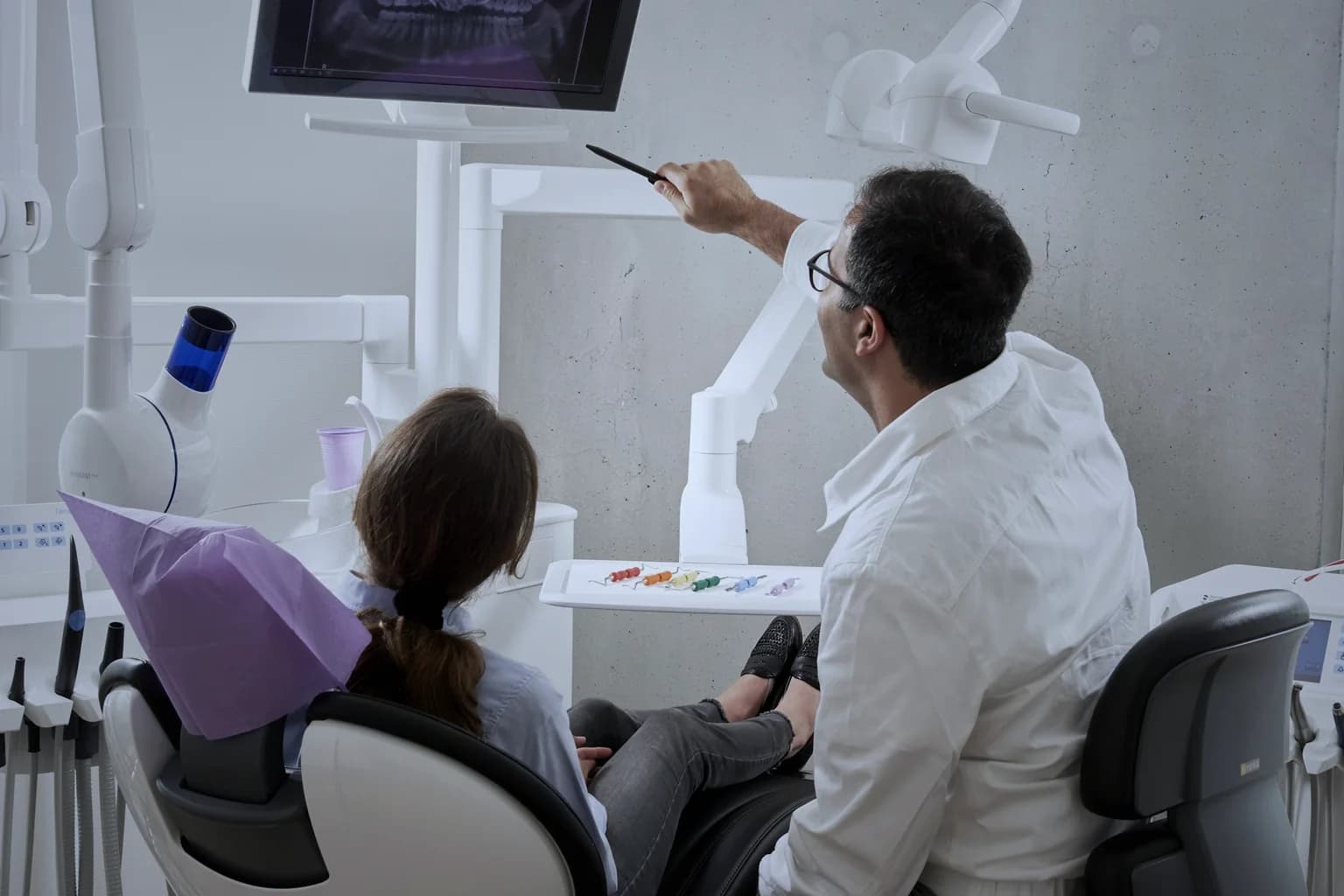
A dental practice in Plano presented a $14,200 full-mouth restoration plan to a patient in April. The patient nodded, said they needed to check their schedule, and walked out with the treatment printout. No one called them on Monday. Or Tuesday. Or the following month. By June, the patient had moved the appointment to a competitor in Frisco who texted them twice in the first week.
The original practice did not lose that revenue to a better clinical result. They lost it to silence.
Unscheduled treatment follow-up is the largest hidden revenue leak in most general and cosmetic dental practices. The front desk is busy. The hygienist assumes the front desk is calling. The front desk assumes the patient will call back. No one owns the follow-up. And the production schedule stays half-empty while completed treatment plans sit in filing cabinets, digital folders, and unreturned voicemails.
This post is the exact follow-up system we install for dental practices in Plano, Frisco, and Dallas. It runs inside GoHighLevel, costs less than $400 per month to operate, and recovers dormant treatment plans before patients forget why they needed the work.
The $300K Hidden Leak in a Typical DFW Practice
Let us do the math for a mid-sized dental practice in Collin County.
You present treatment plans to roughly eighty patients per month. Some are single crowns. Some are implant-supported bridges. The average proposed value across all plans is $4,800. Total monthly proposed production: $384,000.
Industry data from dental practice management groups shows that 18% to 24% of presented treatment plans are never scheduled without systematic follow-up. Let us use the conservative end: 18%.
That means fourteen to fifteen treatment plans per month go dormant. At $4,800 average value, that is $67,200 to $72,000 in proposed production that never hits the schedule.
Annualized, a single practice leaves $806,400 to $864,000 in unscheduled production on the table. Not all of it is recoverable. Some patients truly cannot afford it. Some moved. Some changed insurance. But 35% to 40% of dormant treatment plans can be recovered with structured, persistent, personalized follow-up.
At 35% recovery, that is $282,240 to $302,400 in recaptured annual production from a single practice. That is not theoretical. That is what practices in Allen and McKinney see after ninety days of running this system.
The reason most practices never recover it is simple. Follow-up is emotionally uncomfortable. Front desk teams do not like calling patients who already said no, or maybe, or later. They feel like they are being pushy. And because there is no system assigning ownership, tracking attempts, or escalating timing, the calls simply do not happen.
AI automation removes the emotional friction. It never feels rejected. It never forgets. And it follows a graduated cadence that feels helpful, not salesy.
The Four-Layer Follow-Up System
This system treats unscheduled treatment plans like perishable inventory. Every day of delay reduces the probability of recovery. The first fourteen days are the highest-leverage window. The next thirty days are the secondary recovery window. Beyond forty-five days, the plan shifts to long-term nurture.
Layer 1: The Window of Opportunity (Days 1 to 3)
The first seventy-two hours after a treatment plan is presented are the most important. The patient still remembers the conversation. They still feel the urgency the dentist created. And they have not yet filled the mental space with other expenses, appointments, or distractions.
Day 0, within 2 hours of the appointment: The patient receives a text from the practice. Not a generic reminder. A personalized summary of what was discussed. "Hi [Name], Dr. [Name] wanted me to follow up on the treatment plan we reviewed today. The crown on #14 is recommended within the next 60 days to prevent further fracture. I have attached a summary and a calendar link. Do you have any questions I can answer? -- [Practice Name]"
This text does three things. It demonstrates that the practice cares enough to follow up the same day. It restates the clinical urgency in plain language. And it opens a low-friction channel for the patient to respond.
Day 1: If the patient has not responded, a second text arrives. This one is shorter and adds a scheduling link. "Quick reminder: your treatment plan reservation is open through Friday. Here is the link to choose a time that works: [link]."
Day 2: An email with a one-minute video from the dentist. Not a clinical lecture. A personal explanation of why this specific patient needs this specific treatment now. "[Name], I know it is a lot to take in. Here is exactly what I am worried about if we wait more than 60 days on this, and what it looks like if we get it handled now." Videos increase scheduling rates by 23% compared to text-only follow-up.
Day 3: A final text in the first window. "Hi [Name], I want to make sure you are not stuck on insurance or payment questions. We can run your benefits in 2 minutes, and we have payment plans that start at $97 per month. Want me to check for you?"
A practice in McKinney implemented this first three-day layer alone. Their same-week scheduling rate for presented plans went from 31% to 67%. The front desk stopped making cold follow-up calls entirely.
Layer 2: The Persistence Layer (Days 4 to 14)
If the patient has not scheduled by day four, they are not ignoring you. They are busy, uncertain, or comparing options. The persistence layer is designed to stay present without becoming annoying.
Day 5: An educational email. Not about the practice. About the condition. A two-paragraph summary of what happens when a cracked crown, untreated periodontal disease, or missing molar is left alone for six months. Specific. Clinical but readable. Ending with: "If you are ready to schedule, the link is here. If you have questions, reply to this email or text us."
Day 7: A text with social proof. "Hi [Name], a patient from Plano had the same treatment plan last year. She just texted us that she wishes she had done it sooner. Here is what she said: [testimonial link]."
Day 10: A voicemail script delivered by the dentist personally. Not the front desk. The dentist. "[Name], this is Dr. [Name]. I was reviewing this week's treatment plans and saw we have not gotten you scheduled yet. I want to make sure you are not worried about the procedure, the timeline, or the cost. Call or text us back, and we will walk through it together."
Voicemails from the provider have a 34% higher callback rate than voicemails from administrative staff. Patients expect the dentist to be too busy to call. When the dentist does call, it signals that the case matters.
Day 14: A final structured escalation. The workflow creates a task for the treatment coordinator to make a live call. Not a cold call. A warm call with full context. The GoHighLevel contact record shows every text sent, every email opened, and every link clicked. The coordinator opens the call with: "I see you opened the email about payment plans on Tuesday. Were you able to check with your insurance, or do you still have questions I can answer?"
This is not a sales call. It is a concierge call powered by behavior data. And it converts 41% of the patients who reach this stage.
Layer 3: The Re-Engagement Layer (Days 15 to 45)
By day fifteen, the patient has either scheduled, declined, or gone silent. For the silent group, the goal is not to pressure. It is to reframe the treatment as a health priority that will not disappear.
Day 17: A text with a seasonal or event-based framing. "[Name], with the holidays coming, we wanted to make sure you are not dealing with dental pain during family gatherings. If you would like to get this handled before December, we have two openings next week."
Day 21: An email with a financing update. "We just added a 0% financing option for treatment plans over $3,000. Your plan qualifies. Here is what the monthly payment would look like." Specific dollar amounts outperform vague promises.
Day 30: A second voicemail from the dentist. Shorter this time. More personal. "[Name], I am checking in one last time before your insurance benefits reset in January. If we do this in 2026, it counts toward this year's deductible and maximums. If we wait until 2027, you start over. Just wanted you to have that context. Call us if you want to talk through the timing."
This voicemail is particularly effective in October, November, and early December. It converts 19% of remaining dormant plans by creating genuine urgency around insurance calendars.
Day 45: If the patient has still not scheduled, the workflow moves them into a long-term nurture sequence. One value touch per month. A dental health tip. A seasonal reminder. An update on new technology. No direct scheduling asks for six months. Then the cycle restarts with a fresh treatment plan review invitation.
Layer 4: The Internal System
All of this automation fails if the clinical team does not feed it. The workflow depends on one critical input: a treatment plan status.
Every time a dentist presents a plan, the hygienist or assistant marks the patient in GoHighLevel with a custom field: Treatment Plan Status = Presented. That triggers the entire fourteen-day sequence. If the patient schedules during the appointment, the status changes to Scheduled, and the follow-up sequence stops. If the patient declines, the status changes to Declined, and a brief feedback survey sends.
Most practices already record this information somewhere. In the practice management software. On a whiteboard. In a spreadsheet. The difference is connecting that status to an automated workflow instead of hoping someone remembers to call.
A practice in Carrollton connected their Open Dental system to GoHighLevel via a simple webhook. When a treatment plan is marked presented in Open Dental, it creates or updates the contact in GoHighLevel and sets the status. The entire follow-up sequence runs without anyone on the team touching it.
What to Do Monday Morning
-
Count your dormant treatment plans. Pull every treatment plan presented in the last ninety days that has not been scheduled or declined. If the number is over twenty, you have a six-figure leak. That number is your baseline.
-
Write your day-0 text message. Do not wait for the full system. Write one text that restates the clinical urgency, includes a scheduling link, and invites questions. Send it manually to every dormant plan from the last thirty days. Measure how many schedule within seventy-two hours.
-
Map your handoff. Decide who owns the treatment plan status update. Is it the hygienist before the patient leaves the operatory? Is it the front desk during checkout? Is it the dentist in the treatment room? Write the exact three-step process on a card and tape it to the monitor. If no one owns the trigger, the automation has nothing to automate.
What This Actually Costs
- GoHighLevel CRM with workflow automation: $297 per month
- Two-way SMS messaging for follow-up texts: $0 (included in GoHighLevel)
- Email delivery via GoHighLevel: $0 (included)
- Voicemail drop or manual voicemail recording: $0 to $49 per month depending on volume
- Open Dental or Dentrix integration via webhook or Zapier: $0 to $20 per month
- Total monthly technology cost: approximately $297 to $366
- Treatment coordinator time for day-14 escalations and feedback calls: 2 hours per week at $28 per hour = $224 per month
- Total monthly investment: $521 to $590
- Recovered production at 35% of $67,200 monthly dormant value: $23,520 per month
- Annual recovered production: $282,240
- ROI in month one if the system recovers one additional implant case: 8x to 12x
When to Bring in Help
If your practice management software does not talk to your CRM, if your front desk already has eighty hours of work and no bandwidth for follow-up, or if the idea of writing fourteen days of texts and emails feels overwhelming, we can install this system for you. Most DFW dental practices have Layer 1 and Layer 2 live within three business days.
If you are not sure how many unscheduled treatment plans are sitting in your system right now, take the AI Score. It audits your current follow-up coverage, response speed, and patient communication gaps in under four minutes.
Keep reading
Expired Listing Revival: How DFW Agents Relist in 14 Days
Expired listings cost DFW agents $180K in lost commission yearly. Here's the automated 14-day revival system Plano agents use to relist before competitors.

Financial Advisor Onboarding: First 90 Days Retain 98% DFW
New financial advisor clients in Plano and Dallas churn 23% in the first year without structured onboarding. Here is the 90-day automation that fixes it.

Financial Advisor Check-In Automation: How DFW Firms Retain 94% of Clients
Financial advisors in Dallas and Plano lose $1.2M in AUM to silent attrition. Here is the automated check-in system that keeps clients before they leave.
Quiet. Useful. Rarely.
Subscribe to the Lab
A short note when the next teardown drops.