How AI Lifts Case Acceptance Rate in Dental Practices
Case acceptance is the most operationally fixable revenue lever in dentistry, and most practices are leaving 10-15 percentage points on the table. Here's the actual sequence that closes the gap.
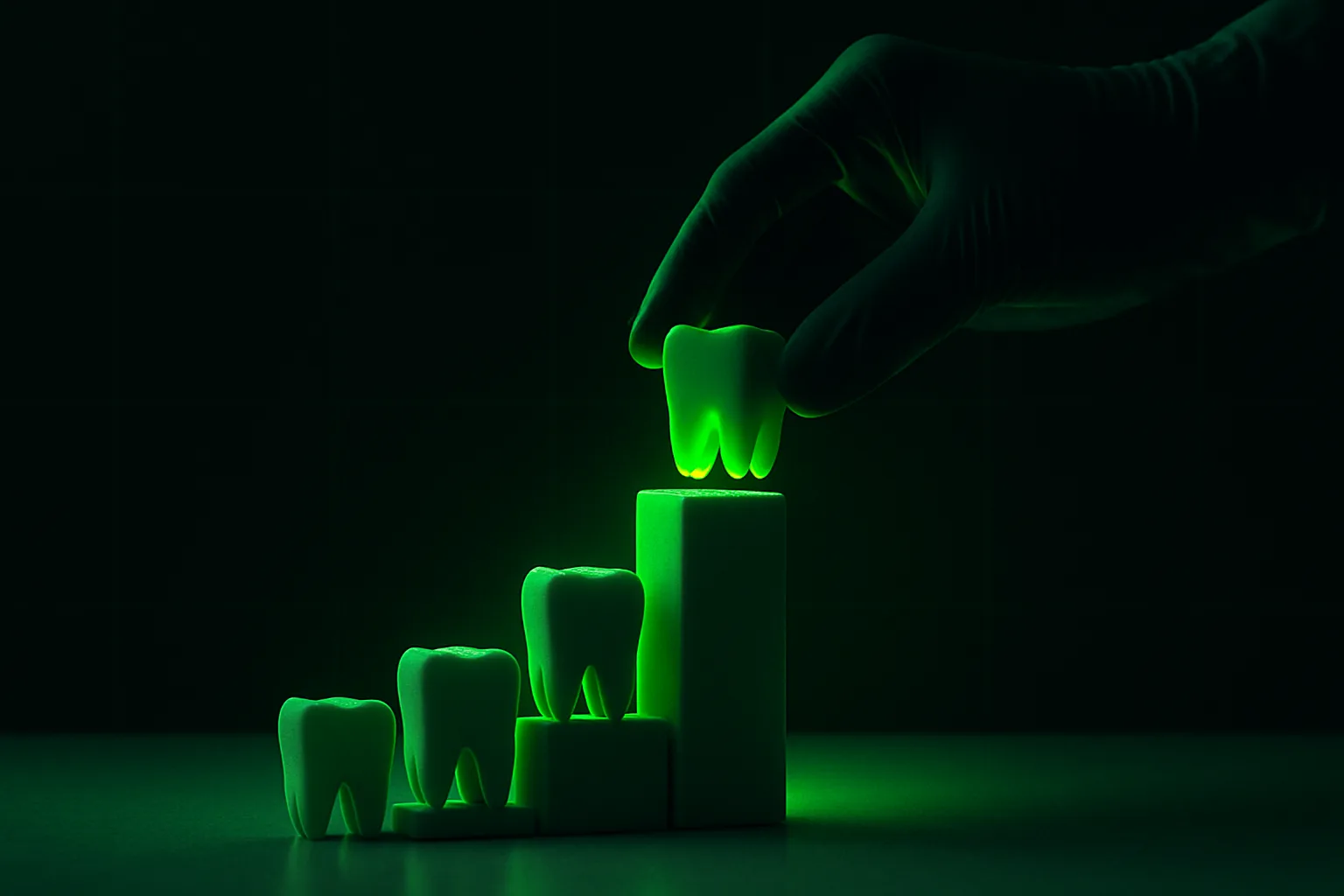
Most dentists believe case acceptance is a clinical communication issue. Better treatment plan presentation, clearer photos, more time at chairside, more confident phrasing. All of which matter, and all of which get drilled in CE courses and at every team retreat for the last twenty years.
The data tells a different story. In 2026, case acceptance is overwhelmingly an operational problem. The presentation is fine. The patient is interested. They walked out of the office without booking because they wanted to think about it. What happens next is what determines whether that case ever accepts.
For most DFW dental practices, what happens next is nothing. And that's the leak.
The benchmark, and where most practices actually are
The standard target for case acceptance rate is 75-80%. Below 65% is generally considered critical. Healthy practices in the 75-85% range are typically running some flavor of structured follow-up. Practices in the 50-65% range almost always aren't.
The math is direct. A 10-point lift on case acceptance translates to roughly 13% revenue lift on presented treatment volume, because every point of acceptance compounds against existing presentation hours that are already a sunk cost. For a $1.5M practice presenting $400K of treatment annually, a 10-point lift recovers $52K of annual revenue. For a practice presenting $1M of treatment, $130K.
The cost of installing the follow-up infrastructure that produces a 10-point lift is typically $4K-$8K setup plus a few hundred per month. Payback period is usually 30-60 days.
That math is consistent enough across DFW dental practices we've worked with that it's not really a question anymore. The question is whether your practice is currently doing the work, and what's blocking you from doing it.
Why cases don't accept (when the presentation is fine)
When we audit case acceptance gaps at dental practices, the same patterns show up:
Time pressure at chairside. The case is presented in 12 minutes. Patient says they need to check insurance, talk to their spouse, look at their schedule. They mean it. They walk out genuinely planning to call back. Then life happens.
Cost shock. The treatment plan is $4,800. The patient processes that for the first time after they leave. They're not opposed; they need a minute. By the time they've made peace with the number, the urgency has cooled.
Decision fatigue. Patient just sat in a chair for an hour. They're tired. They're not going to make a $5K decision in the parking lot. They go home with the intention of "deciding later."
Scheduling friction. Patient wants to book the procedure but the next opening is six weeks out. They'll call back. They forget.
Spouse / partner approval. Patient needs to discuss with their spouse. The conversation either doesn't happen, or it happens without the context they got at chairside, and the energy decays.
Genuine objections. Patient has real questions about necessity, alternatives, timing. They don't always raise them at chairside. They raise them in their head later.
None of these are clinical communication failures. All of them are operational gaps that a sequence can fill.
The 30-60 day follow-up sequence that actually works
What good looks like is a sequence that addresses each of these patterns with the right message at the right time. Below is a generic shape; the specifics get tuned to the practice's actual treatment mix and patient demographics.
Day 0 (same day as presentation)
A short text or email recapping the treatment plan with photos or visuals attached. Friendly, not pushy. Includes the cost, the recommended timing, and a one-click link to schedule. The goal is to put the plan in the patient's hands while they're still primed from the visit.
Day 2
Email follow-up that addresses the most common objection for the practice's typical patient. For most general dental practices, that's cost. The message frames financing options, insurance coverage breakdown, and any in-house payment plans. For a periodontal or implant practice, the day 2 message is more likely to address timing or recovery.
Day 5
Light-touch text from the treatment coordinator. "Hi Janet, just wanted to see if you had any questions about the treatment plan we discussed Tuesday. Happy to talk through anything." Personal, low pressure, opens the door.
Day 10
If still unbooked, a more structured follow-up. Reframes the recommendation in terms of consequences (with appropriate clinical accuracy) and offers a free consultation call to discuss. For higher-ticket cases (full mouth restorations, multiple implants), this might include a video link from the dentist explaining the case again, calmly, in the patient's own time.
Day 17
Patient education content. Article or video about the underlying condition, the typical progression, what happens if treatment is delayed. Not scary, not aggressive. Educational. Respects the patient's intelligence.
Day 25
Direct outreach. Treatment coordinator calls or texts. "Janet, we're holding two slots next week for [procedure]. Want to grab one?" The structured nudge that creates a deadline without being manipulative.
Day 35
If still unbooked, soft pivot. Patient gets a recare reminder framed as "let's keep an eye on this at your next cleaning." The case isn't dead, it's parked. The patient relationship continues.
Day 50-60
For high-value cases that haven't accepted, a final personal email from the dentist. "I noticed we discussed [treatment] back in [month] and you haven't been able to schedule it yet. Just wanted to check in personally. If there's anything blocking the decision I haven't addressed, I'd be happy to talk through it." This single touch from the doctor recovers a meaningful percentage of dormant cases.
Why AI does this better than your treatment coordinator
A great treatment coordinator running this sequence manually for 40 cases a month is probably running it for 8 of them well. The other 32 get spotty execution because the human cognitive load of remembering exactly where each case is in their sequence is enormous and not really what humans are good at.
AI does this better because it does it consistently. Every case enters the sequence on day 0. Every touch fires on schedule. The day 17 patient education content is personalized to the case type and arrives in the inbox the morning it's supposed to. The day 25 nudge mentions the patient by name and references the specific procedure, every time, even when there are 200 cases in the sequence simultaneously.
The treatment coordinator's role doesn't go away. It shifts from "execute the sequence" to "handle the conversations the sequence surfaces." When a patient replies to the day 5 text with a question, the coordinator answers. When the day 25 nudge produces a phone call, the coordinator takes it. The high-value human work doesn't disappear; it stops being drowned by mechanical work that AI does better.
What good copy looks like (and what bad copy looks like)
The most common failure mode in case acceptance follow-up is over-pressure. Sequences that read like used car sales aged out in 2018. They produce immediate unsubscribes and damage the practice relationship.
Good case acceptance copy reads like the treatment coordinator's voice on a calm day, or like the dentist's voice when they're explaining something to a friend. Direct, kind, informative, low-pressure. Bad copy reads like a marketing email.
Two examples for the day 5 touch:
Bad: "Hi Janet! Don't miss this opportunity to invest in your smile! We have a special offer this month and would love to see you back!"
Good: "Hi Janet, just wanted to see if you had any questions about the treatment plan we discussed Tuesday. No pressure either way. Just here if you need anything."
The difference matters. The good version is what gets engagement and books cases. The bad version is what gets unsubscribes and damages the practice's reputation.
When we configure case acceptance sequences at Create A Legacy, the copy is reviewed by the practice's treatment coordinator and the dentist before launch. The agent's tone has to match the practice's voice, not a generic dental industry default.
The math, with realistic numbers
Working through the actual math for a typical Plano or Frisco general dental practice:
- Practice presents: $400K of treatment annually
- Current case acceptance rate: 62%
- Current accepted treatment: $248K
- After installing the sequence (typical lift): 75% acceptance
- New accepted treatment: $300K
- Annual recovered revenue: $52K
- Cost of install: $5K setup, $400/mo ongoing = $9.8K Year 1
- Year 1 ROI: 5.3x
Year 2 forward, the install cost amortizes and the math gets stronger. By Year 3, the cumulative recovered revenue is well into the six figures for a practice of this size.
For higher-volume practices presenting $1M+ of treatment, multiply accordingly. For specialty practices (perio, prosthodontic, implant) where average case sizes are larger, the math gets even stronger because each percentage point of acceptance lift represents larger absolute dollars.
Common pitfalls
Three patterns that undermine case acceptance sequences in practice:
Treating it as a generic email blast. The sequence has to address the case the patient was actually presented. Generic dental health emails do nothing. The sequence references their treatment, their timing, their next steps.
Forgetting the patient gave you a phone number. Email-only sequences leave 30-40% of conversion on the table. Multi-channel (email + text + occasional call) consistently outperforms.
Not having the dentist or treatment coordinator's voice in the loop. Patients can tell when they're getting marketing copy versus a message from the practice. The sequence should sound like the practice, not like a vendor's templates.
Where to start
The case acceptance sequence is one of the highest-ROI installs available to a healthy dental practice. It's also one of the most overlooked.
If you want to know what your specific practice's recovery opportunity looks like, take the AI Opportunity Score. The quiz asks for your current case acceptance rate, your monthly production, and a few other inputs, then estimates the annual recovery opportunity from a 5-15 point lift. 60 seconds, no signup, dental-specific benchmarks.
The full operational AI stack for a dental practice goes deeper than just case acceptance. AI receptionist for missed calls, automated recare and recall sequences, no-show reduction with smart reminders and waitlist filling, insurance verification automation. Each builds on the same data infrastructure.
The complete picture is in our pillar guide on AI in healthcare for small practices. The dental-specific deep dive is at AI Automation for Dental Practices in DFW. Both walk through the install playbook in more detail.
If you're ready to talk through what this would look like specifically for your practice, book a strategy call. 30 minutes. We map the friction, size the build, and decide together whether CAL is the right team to install it. No pitch deck. Just the actual conversation.
Keep reading
AI Receptionists for Medical Practices: What They Actually Do (and Don't)
The vendor demo makes it look like magic. The actual day-in-the-life is more useful than the demo. Here's what an AI receptionist does in a small medical, dental, or veterinary practice, where it breaks, and how patients react to it.
AI vs Hiring a Front Desk: Where Each One Wins
This isn't about replacing your front desk. It's about figuring out what each one is actually good at, and configuring the practice so both compound instead of competing.

Dental Case Acceptance Automation: How Plano Practices Convert 34% More Treatment Plans
Plano dental presentations average $4,200 in recommended treatment, yet 58% of patients leave without scheduling. Here's the automation that closes the gap.
Quiet. Useful. Rarely.
Subscribe to the Lab
A short note when the next teardown drops.